
Webinar
Mastering Multiplex Immunofluorescence: Easy Strategies for Reliable Spatial Biology Results
Achieving reliable spatial biology results begins with confident antibody validation, robust multiplex panel design, and high-quality tissue preparation. In this webinar, Simon Goldstein from La Jolla Institute for Immunology, will share strategies to streamline multiplex immunofluorescence (IF) workflows and improve data consistency. You’ll learn practical tips for validating antibody performance and building custom panels that perform seamlessly across diverse tissue types and research goals.
Whether you’re new to multiplex IF or looking to refine your existing workflow, this webinar will help you simplify complex processes, save time, and generate reproducible, high-quality spatial data with confidence.
Key Topics to Be Covered:
- Proven strategies for validating antibody performance to ensure reliable staining results
- Best practices for designing and optimizing custom multiplex panels across diverse tissue types
- Case studies highlighting sample preparation best practices for enhancing image quality
- Overview of the Orion platform workflow for multiplex immunofluorescence
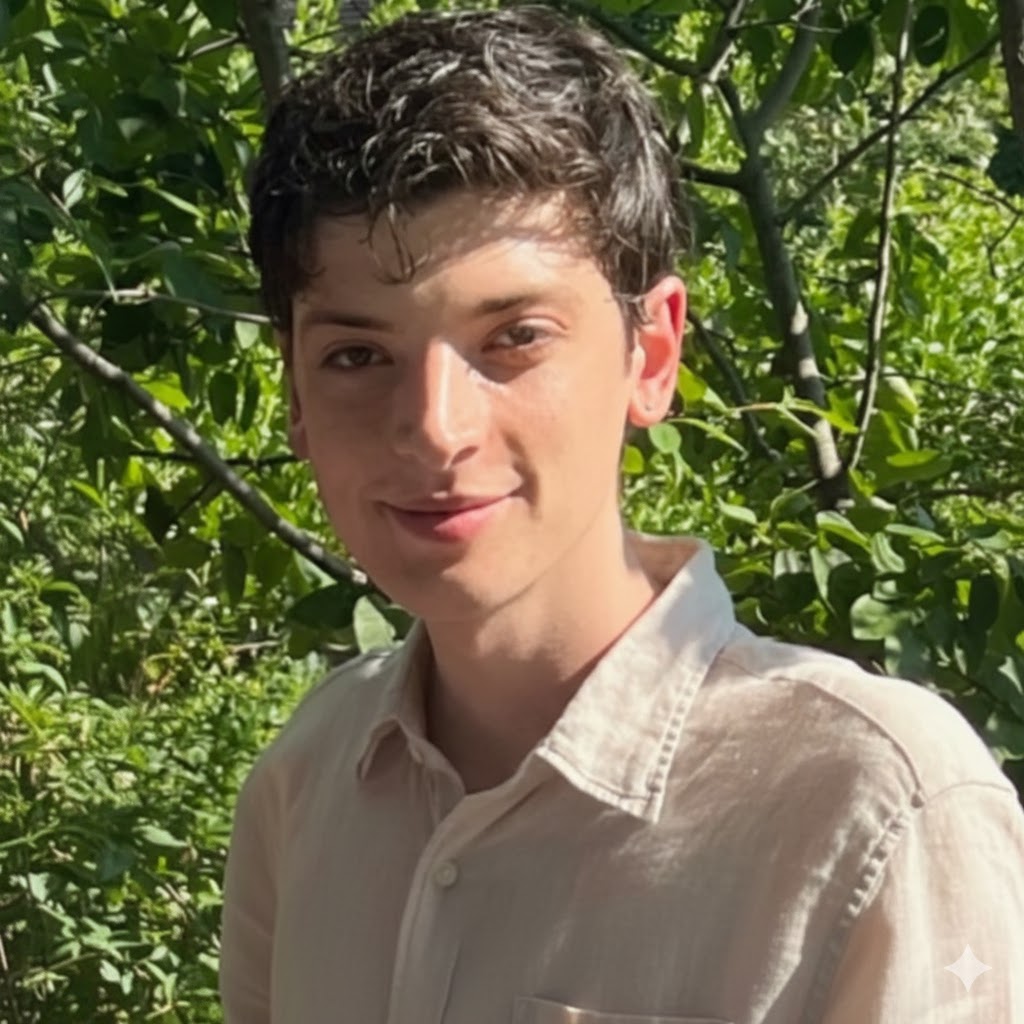
Speaker
Simon Goldstein
Microscopy Specialist II
La Jolla Institute for Immunology
Simon Goldstein is a microscopy specialist focused on spatial proteomics and multiplex immunofluorescence. At the La Jolla Institute for Immunology, he leads advanced imaging efforts using the Orion RareCyte platform, where he has optimized and validated an extensive catalogue of antibodies and designed high-plex custom panels to support diverse projects across diseases and model systems.

Speaker
Tad George, PhD
Senior VP, Biology R&D
RareCyte Inc.
Tad has over 15 years of startup experience dedicated to creating scientific markets for novel instrumentation platforms that span basic research, drug discovery and clinical applications. Prior to joining RareCyte, Tad has held similar positions at Biodesy, Inc. and DVS Sciences, and was Director of Biology at Amnis Corporation. Tad completed his B.A. in Biochemistry from the Univ. of Texas at Austin, Ph.D. in Immunology from UT Southwestern Medical Center at Dallas, and post-doctoral training at Immunex Corp. in Seattle.

Welcome everybody to today's webinar Mastering Multiplex Immunofluorescence: Easy Strategies for Reliable Spatial Biology Results.
Today's speakers are Simon Goldstein from the La Jolla Institute for Immunology and Tad George from RareCyte.
Tad George
All right. Thanks, Rob. So, again, welcome. I'm going to give a brief overview of the Orion sort of version of multiplex immunofluorescence. And we're really excited to, have a Simon talk about, you know, how they use, the system and also, you know, just you know, getting through the, specific challenges related to multiplex immunofluorescence at La Jolla. They've done a really nice job.
So, for a big picture, Orion is essentially a tool that's, deployed kind of in the discovery, translational and clinical space. In sort of spatial biology. And it's kind of, I would say therapeutically oriented, you know, modern therapies, are kind of designed to, you know, alter microenvironment. What's meant by that is from a high level recruiting the right cells in the right state to improve patient outcomes. And of course, when you're in that translational clinical space, you know you want to measure these things with confidence. It really requires two things. You have to have both of these things. Right. But the biomarker panels need to be large enough because you need to resolve those microenvironments. But at the same time, you need sample throughput to analyze cohorts for statistical power. And that's really where Orion, you know, fits in that space nicely because prior to Orion, or if you don't have Orion, you basically are forced to use one or the other. So, if we think about, you know, biomarker panel size on the y axis and, you know, study throughput on the x axis, a traditional way of increasing that or getting enough information on that microenvironment has been to do cyclic immunofluorescence due to spectral overlap and so there's lots of great tools that give you tremendous amount of information, but they're kind of throughput limited for that, that statistical significance necessary. There's plenty of great tools that have super high throughput, but they typically have, you know, insufficient information. IHC or low Plex multiplex immunofluorescence. And I think Simon and La Jolla, you know, work with lots of these technologies.
But really what Orion does is fill that need in that clinical translational zone. So we like to say it gives you the essential information with statistically significant, studies. So, Orion the major fundamental, I would say technological breakthrough is that, you know, we can essentially measure 20 channels of fluorescence, in a single staining and imaging around and that really translates to a couple things. The big thing it unlocks is the throughput, is fast, but it also, and Simon will talk about this really low run costs and data quality, which is critical. The tissue is preserved. It is whole specimen. You can image, you know, ROI or the whole specimen, for complete spatial context. And, of course, in all of these spaces, flexible panel design is really necessary. And we are releasing, this year, a high capacity system, actually, which has a 30 slide loader, which I'll talk about a little bit. So it also allows you, you know, to operationalize, a large cohort studies and also accommodates multi-user environments, kind of like, La Jolla has.
The system pretty much works for any tissue, any indication, 20 channels in a single round. I do encourage you to go to our website, in particular the Tissue Atlas page, and I'll kind of go over there. You know, we have multiple sort of, examples. You can click on any of these or kind of show you, you know, this is a whole slide mouse ileum, for example, you can see super high resolution whole slide. The other thing is oftentimes because the single round approach, you can actually do same section H&E. So you can see in this particular panel we didn't really stain for muscle. But as you can see nicely in the same section H&E muscle and goblet cells etc.
So really nice sort of pathology, oriented workflows that the system enables. So in terms of building, panels, you know, we essentially use, antibodies directly conjugated to ArgoFluors. They're all IHC validated. I probably should update this slide. We have over 175 biomarkers available in the catalog. We also offer off the shelf panels, as well as dye kits and services for custom biomarkers and panels and a panel design tool to configure, you know, custom panels. One thing that's nice is, you know, even the off the shelf panels, all of the reagents are supplied as individual tubes kind of like flow cytometry. So, for example, if you're interested in diabetes, you can look at this particular panel and customize pretty easily. Like if you're not interested in CD20 you can take this out, put in DC-Lamp and submit an order. And then it's really very easy to develop panels. So, you know, if you're starting from scratch, you can select biomarkers with a panel designer if we have them all available in the catalog, the panel designer will actually assign the channels you can watch bills and order, and then you verify panel performance through a single titration on into an intended tissue type. Super fast and easy to get up and running. Any customs you have is really straightforward. You validate, you know, that clone against IHC. Label it with the ArgoFluor and then verify that the immunofluorescence pattern looks like IHC. You know we do lots of these in house. It usually takes us a couple of weeks to validate up to 4 customs. So very easy to customize and rapidly get up and running. And the testing workflows, you know, designed really for, you know, high volume settings or multi-user settings. You know, with essentially the staining and imaging performed in parallel. So, which allows you to, you know, stain samples as they come in, while you're scanning stuff from last week. And the scanning automation really, you know, delivers what we say, a continuous stream of quantitative results. Because while you're imaging it's also processing the images and doing quantitative analysis with templates, to really get you results really quickly. So very straightforward workflow.
A couple of things to highlight. It's whole slide. You know, over eight square centimeters of imaging area. I think Simon's got a slide. It kind of shows you that you can stain dozens of slides per day. It's really just cocktail, direct conjugates, just like you do for flow cytometry. What's nice about these dyes is they're very photo stable. So you can either scan them right away or you can bank them for up to a, you know, a year, without any loss in signal. You can really schedule your, you know, staining and imaging whenever it's convenient. The system, 20 channels in a single scan, 24 / 7 unattended operation with 30 slide loading capacity. You can also perform, you know, once you've done a scan, same slide or additional, we call it informed immunofluorescence round. So it's fully compatible with cyclic if you want to go higher plex.
And then the quantitative output comparisons across specimens to you know do the quantitative analysis. The quantification is very simple. Basically there's sort of human in the loop. ROI annotation. Typically a pathologist will get involved looking at either the brightfield image or the IF to identify regions of interest. You can classify cell types and states, using thresholds and Boolean logic. And typically, you know, most commonly what people do that is measure, you know, density in and around the lesion. And of course, you summarize across a whole cohort. We're not just analyzing one sample. We're usually, you know, analyzing dozens in a study.
So, Orion basically is, you know, is an ecosystem kind of for that translational, clinical, sort of, part of spatial biology with a single round workflow. The reagents are all validated for the Orion system with low run costs. It's very easy to build those panels for development of multiple reliable panels with the building blocks that we have. And we have great onboarding and support for guaranteed success. Anyway, that's just, you know, quick, overview of Orion. You can obviously ask questions and we can address them at the end. But with that, I want to hand off to Simon.
Simon Goldstein
Okay. Thank you. So I first just want to introduce our core facility. So I work at the La Jolla Institute for Immunology and Allergy. And we are a joint microscopy and histology core facility. We have seven full time employees with 102 years of combined experience. And we describe ourselves as an end to end core. So we really help with all stages of experiments from, starting with experimental design all the way through sample prep imaging and analysis and interpretation. To give you a sense of kind of our output, we assist with around 20 to 30 publications a year, and some of those we are coauthored on. And, last year we generated around 6,000 FFPE blocks and 10,000 slides. And then I just want to highlight also some funding sources. We have. So first I just wanted to briefly talk about why we chose the Orion platform for our core. So we had traditionally offered multiplex IF services, just through traditional multiplex IF and we were facing, multiple challenges with that. First issues surrounding auto fluorescence. When you're trying to max out these smaller low plex multiplex IF auto fluorescence can become problematic because you already have so many, such limited amount of channels. And then, how we were doing is we were using primaries from different hosts and then going in with secondaries and that, cross-reactivity issues come up with that and it can be hard to find antibodies from different hosts that work well. And then, like I said, limited amount of channels. We are just finding that, labs and companies we were working with, they really just were looking for more information.
So Orion kind of helped us address all three of these challenges. Orion has a nice system where, the auto fluorescence is, extracted from the channels that it, affects, which was nice. Like Ted mentioned, all Orion antibodies are conjugated, so there's no cross-reactivity issues. And you can go with antibodies from any host, which is nice. And, you can stain up to 18 biomarkers in one round, which we really liked. Some other considerations we had were like I said, we we do help people with image analysis. And we really wanted to find a system that generated really high quality images. And we were looking for specifically a system that didn't rely on cycling.
There are a couple reasons for that. One, you have a high risk of tissue damage with cycling. And two, it can be a little complicated to decide, the order in which you need to stain. So being able to stain all, your markers in one go was really attractive to us. And then just some other general considerations we had in terms of the time it takes for, technicians to do the staining and the overall cost.
And like I said, we had a history of doing a lot of immunofluorescence already at the core. So we really didn't want to reinvent the wheel. We wanted to find a system that we could use our workflows we had already established comfortably. So here's just a quick look at, how the protocol works. So what's really nice about Orion is I can stain, say i am staining 60 slides in one day, and half of them are just a basic single plex immunofluorescence stain. And some are Orion slides. I can actually go through the initial process, all together. So if you're familiar with traditional immunofluorescence, the workflow is pretty much identical. So first you bake your slides, you go through the deparaffinization process. You go through antigen retrieval, RareCyte has a really nice autofluorescence quenching protocol where you use these LED panels, and you have the slides in a hydrogen peroxide buffer. And then you also do a UV bleach, and then we, typically opt to stain our antibodies, primary antibodies overnight.
And just one we typically find it provides a better stain and two just in the effort of time splitting into two days helps us from a core facility perspective. And then the next day, you just go in with your secondaries and nuclear dye and coverslip.
So like, I said one of our big considerations was the low cost. I'm not going to really get into the details, but we do use these Freequenza racks, which allow us to cut down on the cost of the reagents. What's nice about Orion is that really the only cost is the antibodies themselves. There's no extra, fancy parts that end up building up cost. So it really comes down to the antibody costs. And one way the Orion is nice is that there is a generous scanning area. So, there's a lot of space on the side that you can place tissue on. And so we, we work with some very talented histology sites. And to give you kind of a sense of how much room we typically can comfortably fit around five mouse lungs on one side. And so being able to add multiple tissues for multiple blocks onto one side is we were able to dramatically, reduce the cost of the assay. And that's very useful for us from a core being able to have labs be able to actually afford these stains.
And just wanted to very briefly highlight the image quality. So what's really nice is there's this high dynamic range of signal. So you can see there are dim cells and bright cells. And that becomes super important. When it comes to analysis. This is an example from a human tonsil. Another thing that was very attractive for us is that the data output is very analysis friendly. It generates as an OME tiff and you can really use your preferred software of choice. We just happened to be, our core really likes using QuPath and it's very compatible with QuPath which is nice. And all the channels end up pre labeled, so everything is really easy. And yeah, that was also an attractive thing for us.
So I want to take a bit of a step back and go a little into the basics of histology, because I have found, one of the pain points that can come up is working with difficult samples that were maybe not properly handled and this is a general issue, you know, unrelated to necessarily Orion. It's just a histology, issue. You want to get your basics down if you want to be able to get high quality, multiplex safe results. So, we have found the type of fixative isn't super important. We haven't noticed a huge difference across the most popular fixatives. Something super important is you don't want to try to jam your tissue into cassettes if it doesn't fit. You might end up with something like, on the top right where it looks like, your tissue got squeezed and it ends up like a waffle, basically. So, if you, if your tissue doesn't fit you either want to go for a cassette that is deeper or you want to trim your samples appropriately so they will properly fit. Super important is having a high ratio of fixative to tissue. So we recommend at least 20 to 1 fixative to tissue ratio. Another thing that we've learned is that it's really important to get your samples into fixative as soon as possible as possible. If you're placing your tissue in PBS or media and waiting a couple of hours and then placing in fixative, you're really compromising the quality of your sample.
We really don't recommend doing that. And you really, you want to fix your tissue at minimum 24 hours and up to 72 hours at room temperature. Selecting the container you're fixing your tissue is also super important. You really want to avoid. Well, like we said, you want a high ratio of fixative. So really, please do not try to fix your tissue in small Eppendorf tubes. But it's also important to not try to fix tissue in these conical bottom tubes, because what's going to happen is your tissue is going to be sitting at the bottom of the conical tube and the bottom of that tissue isn't going to be fixed as well as the top. So we recommend stuff like urine cups or larger wide bottom containers and we recommend, rocking your tissue as it's fixing so there's a nice flow of fixative. And some things to look out for is if you notice your tissue is still pink on the inside, or you notice visible blood, it's not fixed enough yet and you need to continue on with fixing. And for very thick tissues, it can help to trim mid fixation so that all areas of that tissue is fixed properly.
But there are cases where you don't have control of how your tissue is fixed. So you're working with clinical samples that are archival samples or a collaborator made the blocks for you. And this is what you have. You have to make them work. We have learned some tips on how to rescue some of these more difficult samples that maybe were not properly fixed. So one of my first big recommendations is finding these high adhesion slides. So we have had a lot of success with this brand of Tomo slides. They just hold onto the tissue a little better. And for tissue that you're seeing, it's like falling off the slide. I highly recommend switching over to a slide like that. Another maybe kind of basic but underappreciated technique is, after your slide is fully dry, placing it on a side warmer that's at 37 degrees. For 24 to 48 hours, the, 37 degree temperature just helps with the chemical reaction of the tissue binding to the slide. And you'll notice that the tissue will stay on the slide a little better.
And then probably the most important thing we've noticed is, so there's these two classical antigen retrieval buffers. You can opt for either a high pH9 Tris EDTA buffer or a low pH6, citrate antigen retrieval buffer. And there's a trade off between the two. A lot of people default to using the high pH Tris buffer because it provides a brighter stain. typically. However, it is much harsher on tissue. So if you're having these issues with your sample quality, I do recommend switching over to citrate, the low pH citrate antigen retrieval buffer. You just have to keep in mind that you need to redo all your antibody optimizations and titrations with the buffer that you're using in mind, because like I said, there are differences in the signal intensity depending on which buffer you use. So I just want to show some examples of that. So these are sequential slides on the left was using a normal slide and Tris EDTA antigen retrieval buffer. And on the right is a sequential slide using citrate buffer. So you can see it causes dramatic difference. So we were able to rescue this sample in this case by changing the antigen retrieval buffer. And if so, if you've ever see this kind of web like effect that's not actually an Orion or, staining artifact. That's a sample prep issue with your tissue. And you want to try troubleshooting different ways to try to correct that. And then here's just another example about this time on the left is citrate, and on the right is Tris. And this is a mouse spleen example.
So I'm now going to talk about, how I go about antibody validation when starting to build these Orion panels. So as Ted said, RareCyte has a really extensive great catalog of antibodies. So that's really going to be your first step, to look through what they have, and see. And chances are they probably will offer a lot of antibodies you're looking for. But inevitably there might be cases where there's markers that are not offering any. So our core, we've moved to conjugating our own antibodies in that case. So really one of the biggest and most important steps is finding good IHC validated clones to work with. And one of the tools I would recommend using is this website CiteAB. It's a great resource to look for IHC validated clones that have been highly cited. So it shows you how many times they've been cited. And you can filter specifically for IHC paraffin.
And that's also another common confusion point for people. Antibodies that have worked and frozen tissue will not necessarily and often not work in paraffin. So you want to specifically look for clones that are been cited highly and validated specifically in IHC paraffin. There is also a lot of other resources I have up on the screen, a lot of papers that just test different clones. I want to highlight on the bottom right. What's nice is if you can find papers that actually show negative data, it's rare, but it can be great. So this was a case where we did a project on rhesus macaques, and we were going through with our human antibody catalog, and we were trying to figure out which antibodies are cross-reactive and would work in the macaque tissue. And these two papers they provided negative data. So they listed clones that didn't work. And so that's going to save you a lot of time and effort as well.
So, for the amine based Orion conjugation we do it's important that you look for antibodies that are carrier free and don't have the assay. And a typical rule for us is that if an antibody is a recombinant, that means that the company has spent the time, effort, and resources to make that antibody and it has a higher chance of working. So if we see it's a recombinant, that's a good green flag for us. And then typically if we have a choice, we like to go with monoclonal antibodies over polyclonal antibodies just because it's a little cleaner. And you know, exactly what you're labeling and which antibodies, which clones are actually working. There's also less lot differences which can come up with polyclonal. We have used monoclonal antibodies as well. But if you have a choice, it's better to opt for a monoclonal.
So I just want to talk about how I go about the antibody validation process. So we've kind of developed this streamlined workflow for testing antibodies. So I will typically, when we receive the antibody, I will test it in both antigen retrieval buffers just to get a sense of how well the antigen works in both. And we stain at a fixed concentration of two micrograms per milliliter, with a primary, with the primary antibody, and then go in with the secondary antibody. And we found that that concentration allows us to give a good yes this antibody works or no, this antibody is not going to work for Orion. And we, we've tried not to squeeze further. If we don't see signal at this concentration, it's probably just not going to be a suitable antibody. And then what we do is we scan the image at three different exposure times, which allows us to analyze the signal abundance and then decide which channel to place the antibody in and proceed with the conjugation and titrate the antibody.
I want to point out that it is really important after you conjugate the antibody to test that, your conjugation was successful, I will say I've conjugated probably over 100 antibodies at this point, and only I have had one antibody that didn't like to be conjugated and failed. So it is really a high, high success rate. However, there are these rare cases where the amine based conjugation, that for whatever reason, the antibody doesn't like it and it won't bind any more after the conjugation. So don't just assume after you conjugate that the antibody will work, you do need to test and make sure it works and find an appropriate titration.
This is also a stage where having really robust controls is extremely important. You don't want to do all this work and then find out you are looking at some nonspecific kind of signal. So having really good positive and negative control tissues is really key at this stage. And so if you know that one tissue is supposed to have a high expression of your protein and one it has a low expression, that's really nice. If you don't have tissue available for something like that, there are other techniques you can go with. You can overexpress your protein in a cell line and generate a cell pellet. And then you add it to histo gel and you can actually create an FFP block out of those cells. We've also started experimenting with these protein gels where we actually just ordered the physical protein and incorporate them into gels and make blocks out of that. And then classic IgG controls are always a useful tool. And knockout tissues are extremely useful tools as well. I want to stress that is, it is very important to test and optimize your antibodies in your end tissue of interest because I think sometimes people aren't thinking about the fact that certain targets are expressed at a very different range depending on the tissue you're staining in.
So here's an example that kind of highlights that. So this is a multi block with spleen, liver, and kidney. And it's stained with the marker Nak-ATPase. In spleen it's relatively dim In liver it's, it's pretty bright. And then in kidney it's extremely bright. So you can imagine if you had done all your optimization in spleen, and then you want to apply all of what you've done in spleen to kidney. It's not going to work out well for you because you were expecting that the signal is much dimmer than it is in kidney. And I just want to highlight how that can make things go wrong. So if you end up with an antibody that is oversaturated, you'll end up with issues with that antibody bleeding into neighboring channels, and you'll get these weird kind of digital artifacts. So if that if you ever see something like this, it means something went wrong in that optimization and titration stage. And you need to go back and retitrate your antibody correctly.
So I want to talk briefly about, panel design. It really is like a puzzle. So what I would recommend as your first step is to take a look at the native auto fluorescence in your tissue. So, typically there is always a high level of fluorescence for us in that kind of green range. However what we have noticed is that there's a lot more variation, and what we like to call the secondary auto fluorescence peak, depending on the tissue type. And you won't really know what you're dealing with until you take a look. So the first thing I like to do is just run a blank slide with no antibody through the Orion protocol and then take a quick scan and look at the tissue in RareCyte's Artemis software. And what's really nice is you, it allows you to go channel by channel and take a look at how the autofluorescence looks. And then you can manually, actually set your coefficients and see how the autofluorescence gets subtracted from each channel.
The reason I like to do this as a first step is for that secondary autofluorescence peak. Like I said it, it is pretty variable. And depending on where that falls, you can create a secondary autofluorescence channel to subtract out that secondary peak. And that's going to take end up taking place of where maybe one of your antibodies would have been.
So you need to know where that secondary autofluorescence peak is before you start assigning your markers to all your channels. So, on the right here is actually all the ArgoFluor channels that RareCyte has, and what I want to get across in this slide is that you can see there's this rank column, with scale of 1 to 4. And so that would be how it correlates to how bright each fluor is. And this becomes very important when you're deciding which channel to conjugate your antibodies to. So, for your low abundant antibodies that aren't as bright, you really want to conjugate those ones to your brightest of fluors. And then on the flip side, if you have a very highly abundant, antibody signal, you are able to place them into those dimmer channels.
So I just want to show a quick mock example of how this might work. So you can imagine on the right, these are all antibodies that you have. You've gone through the optimization process, you've validated they work, and then you have assigned them an abundance ranking. And then at this stage, you're needing to decide these on the left are all your open, available channels. And you want to decide which fluors to conjugate each marker to. So in this case I want to highlight, if you take a look at FoxP3, that was our lowest abundant antibody. And so for this one it's very important that we place that into the brightest channel. So you can see channel four is rated as very bright. So I place FoxP3 which is the lowest abundance into the brightest channel. And then on the flip side, if you take a look at CD3, it's a very highly abundant antibody. So I'm able to place that into the dimmest of channels.
I also just want to point out that at this stage it's important to keep in mind the analysis as well. So markers that you expect to be co-expressed, it's probably a good idea not to place them as direct neighbors. For example, CD3 and CD4. If you can find a way to put some distance between them, it could be useful because it can start to be a little confusing. If you place them next to each other, you might not know if you're looking at, spillover or if you're looking at the true signal of each antibody. So then from there you have you conjugate all your antibodies. It's a very simple, amine-based conjugation. Really any technician or student in your lab should be able to do it. RareCyte provides a very simple protocol and you can block by all the fluors directly from RareCyte themselves. And it's a really quick protocol as well. And you can get it done in a couple of hours. Then you titrate in your tissue of interest.
Like I explained previously, this is a very important stage because it tells you at what concentration you need to stain, your final panel. And then after that, you generate single staining controls of each of your markers, and you scan them and you upload them to the Artemis software. And that helps you build extraction matrix, which will be used to process your scans.
So if you're familiar with flow cytometry, this will look very familiar to you. Like Tad also explained earlier, it works in a very similar way to flow cytometry, where you kind of build this matrix. And then each of the values listed shows the extraction coefficient. So you have your donor channels on the left and your recipient on the right. And so having accurate, and representative single stain controls is super important because that's going to give you the best, final, properly extracted image.
So I just want to highlight what is possible when you work out all these methods and, what we've been able to achieve at LJI using Orion. So in the past year, we stained with 96 unique, different biomarkers across four different model systems #NAME? And I think the maybe the most striking is that we stained in the past year, 49 unique combinations of antibodies, using the Orion system. And then also if you are able to generate these pretty images, you might be featured on RareCyte's yearly calendar. So this year, we made the cover which was very exciting. This was a project we did with Cecilia Becker from the University of Copenhagen. And it's showing piglet jejunum. So she came here to LJI and worked on this Orion project with us. And so that's how we have. I think we can take some questions.
Tad
Thanks Simon. We did get actually several questions that span kind of a range of, you know, technologically oriented questions and also practical questions.
So I think the first one, I'll probably answer this because it was related to when you were mentioning, you know, placement of say, CD4 and CD3. You know, how you would space that using given that there is spectral overlap on the system, obviously. So the question is, you know, have we experienced any issues with markers present on the same cell related to fluorescent, you know, closely overlapping spectra? Right. So I think that was kind of what you were getting at is you typically spaced those apart.
So, it's okay actually, if it's actually okay if you have spectral overlap for, you know, spatially co localizing biomarkers because that matrix you mentioned will subtract it. The main issue is that you will erode a little bit on the high end of the dynamic range. The camera's 16 bit. And when you're collecting data, if you have a lot of crosstalk between two biomarkers that are, you know, in the same pixel, like spatially colocalized, you can saturate the detector faster than you would if they were spaced. The extraction matrix will subtract that pretty accurately. But you're right. Typically if you're able to space them, you definitely do that.
It's not a problem at all. The same cell isn't bad because it's the resolution is, you know, the pixel size is 0.325 microns. So if you have like FoxP3 in the nucleus and say CD3 on the surface. Those are totally in different pixels, right. So it's, that's not an issue. So that was the I wanted to kind of that question was kind of right off, related to when you were talking about like CD4 and CD3.
This next one, is probably a specific one more for you because you had mentioned the importance of controls and experimenting with protein gels. And that, you can tell, is kind of a new thing for a lot of people. So do you have a recommended gel that you use that you find it works well or?
Simon
Yeah. So I, for so for the cell pellets, I know we use histo gel which you, you basically spin down the cells into a pellet and then you, it's kind of like an agar-like, consistency and then for the protein gels, that's relatively new. So if you have questions about that, I would email histology@lji.org. And our core director, Z, he's the one who's been recently experimenting with that and he can provide you with our protocol for how we're doing that.
Tad
Cool. Excellent. Okay, this next question, I'm going to combine there's two related questions that came in. So I think I'll just combine them. It's related to how many markers or how many biomarkers you can run. And one part is how many markers can I do. The other question that came in is how can you enable multiple staining rounds. So maybe I guess Simon talk a little bit about what's the average panel. It looks like you've got done 49 panels. You know, are you finding people that are wanting to cycle or what's the average panel size.
Simon
I would say yeah. So on average I would say we're running like the most commonly would be 14 to 16 on average. However, a lot of times we're also maxing out at that 18 as well. We haven't gotten into cycling beyond 18, but we are interested in getting there very soon.
Tad
So I'll answer the other part because the question was the other part of this question is this person ask the question, how can we enable multiple staining rounds? So, yeah, we've done, you know, in-house, like a 51 plex across three rounds. A lot, a lot of customers actually are doing something we call smart cycling where you can actually stain with one round, put it in the freezer for up to a year, you learn something new, and you say there's a different cell type that I want to address. You can actually pull out of the freezer and do another round. So that the specific question is like, how do we how do we enable that?
So basically, you know, as you described, the system has 20 channels. One of those channels is for DNA marker and the other is dedicated autofluorescence. There's 18 ArgoFluor channels for biomarkers. So if you do that first round before imaging, you're going to stain and then you put a cover slip on. You put it on the Orion. You will scan that slide. If you want to do subsequent round, you just remove the cover slip. And we've found, we screened a whole bunch of sort of antibody removal protocols. We ended up finding a really nice product from Thermo to basically remove the signal, without damaging the tissue. And then you basically just stain for the subsequent round, coverslip and image.
And like I said, we were probably, we're thinking of coining the term smart cycling because normally we're not doing it up front. We're not saying, oh, at the beginning, we're going to go after these 50. It's more like a reflex. You know, once you learn from the sample or you know, learn something else or reviewer says, hey, would you look at this, that, or the other, we'll just kind of do an informed second cycle is, I think, what most people are doing. So I hope that answers the two questions there.
I think another one, this is an answer. I mean, even though you answered directly, I think it's worth repeating. So what is the success rate of amine conjugations for an antibody across fluors, I think you mentioned something like it's 99%,
Simon
Yes, it really is a high, high success rate. I've had one antibody that doesn't like to be conjugated through amine conjugation.
Tad
That's great. I'm going to expand on that too because when we were developing the Orion there were multiple different reagent strategies we were thinking about pursuing. And a lot of them involve amplification schemes or bulky side chain type things. And we ended up going with a direct conjugate, low degree of labeling because it has so much success over, you know, 50 years in flow cytometry. It did certainly put stress on the instrument. You know, we ended up having to essentially put nine high powered lasers into the instrument to make sure we got sensitivity to low abundance biomarkers with antibodies that are conjugated to, you know, on average, like two fluorochromes, right.
And that low degree, one of the issues I think some people have with, with amine conjugation is they think more is better. You don't want to overly perturb that antibody. So like I said, I don't want your degree of labeling typically is Simon but, we're typically 1 to 5. Yeah. No. And amine conjugates, you know, random across the ensemble, the antibody. So yeah, our success rate is about the same that you're seeing there.
And this last one I think is interesting, given that it seems like you have multiple set of diverse users. You mentioned sort of technological challenges. Well, how do you actually get users to decide on a panel? I can imagine there's sort of some existential problems you'll have just deciding which markers to use. And interacting with so many people so I am interested to see what you have to say about that.
Simon
So we kind of like to work backwards. So the first question we kind of address with them is “how do you actually want to use the data you're generating” because that will obviously inform the panel you're selecting. And you really want to think about how you will be doing that analysis. Like what cell types you're going to try to parse out. Because the worst thing that could happen is you just kind of choose a more random panel, and then you're missing some markers that would have been essential for your analysis. So you really want to think about how you're going to end up analyzing your images.
And then from there. So we kind of, like RareCyte has a catalog, we have our own kind of catalog of the antibodies we have generated that we have available. And we kind of talk through based on what we have available, what would work for them. And then if there's any gaps, then we move to finding those custom antibodies that will then move on to conjugate and then either add to our catalog or you know, the user sometimes owns the antibody as well. So it just depends.
Tad
Right. Okay. So we had a flurry of questions that come in that's spanned a few different facets. So the first one, this is more of a sales oriented question. So I think I'll, I'll answer that one. So basically this question is what if I want to see data from the Orion platform on my own samples before committing to purchasing? And also do we provide services, and support all that kind of. So this is a great question. So, whenever someone is evaluating the platform for purchase, we do have, you know, proof of concept, programs. We also definitely connect, you know, people that are interested with existing users. I know La Jolla, you at La Jolla I don't know how many of existing customers reached out to you just to, you know, get that confidence that actually, you know, it's a it's a, you know, the site will be successful. Right?
So it's kind of two things you're looking at is it going to work technologically. And secondly, am I going to be able to master the technology. So there are definitely programs today that we can work with you to evaluate the technology. We also we do services, many of our biopharma, they own instruments. They also have instruments at CROs. They'll have us develop panels. We train, have panel transfer programs, to you know, CROs and to customers or, and some of our academic partners are doing that too. So we definitely do services we do custom biomarker services. If you don't want to do what Simon's doing and make your own reagents. So it's super flexible that way.
Okay. So different question is a little bit about the throughput or how this is a straightforward. How long does it take to, essentially do an 18 plex staining I think is how long does it take you to do an 18 plex staining? And then I think the back end is also how long does it take to scan?
Simon
So from the staining aspect, it takes really the same amount of time as if you were staining one antibody, which that was what was super attractive to us. The only difference in time is physically pipetting the extra, different antibodies. So the staining is very straightforward. It's, it's like flow cytometry. You're just adding all the antibodies, at once to your mix and staining. And then the scanning, it really obviously would depend on the tissue size. So it's a high range, but I found that a slide that's fully maxed out on tissue, and you're scanning all channels. It takes around six hours. In that range.
Tad
That’s what we found. It's a basically it takes about an hour and 15 minutes/cm². Right. So if you're if you're doing 4 or 5 cm², that makes sense. And then I suppose you run the system unattended overnight. And if you're able to.
Simon
Typically. So right now we just have the two side holder system. So typically when I have a lot of slides and I'm scanning, I'm pretty much scanning slides every day. So typically I'll, you know, start some scans in the morning that I know will finish by end of day and then I can load in two slides before I leave for the day that will scan overnight. And that's kind of how I get through my scanning most efficiently.
Tad
Yep. Great. The last question here is related to, you know, does essentially does RareCyte make their list of clones available? And also of, you know, how do we work with customers, you know, that have good clones and etc. So I think for both the, whoever asked the question about, like, you know, proof of concept for evaluation as well as who who are asked this question, definitely reach out to us. We freely show what our clones are, like you know, you know what our catalog is. We tell what clone is there. We do have, I would say reverse biomarker transfer programs. So like, if, for example, Simon developed a really nice biomarker, he can actually share that information with us, and we can put that in the catalog ourselves, as long as we do the validation. Because, of course, anything we sell, we need to make sure we have a QC infrastructure for making lots and making sure that that we have, you know, the blocks and that, you know, we can master it here to support the product. And with the panel design tool, also, you can, you know, it has access to the entire catalog and any custom biomarkers that you make, you can put into the catalog and you can share those with the community, including with us, if you want it. You don't have to, but it's a pretty easy way to, to, you know, build that, that community. And like I said, we're sitting around 175 biomarkers now. And when I say biomarker, those are actually, those are biomarkers, some of the biomarkers that are from multiple clones. I actually don't know what the number of clones that we offer is more than 175. But, you know, we're on pace to add another 100, 150 this year, because of just the sheer amount because there's lots of labs like you at La Jolla that are using it to this extent, right, that are really pushing the boundaries in different application areas.
I think that was the last question. So, anyways, great. Thanks, Simon, for doing this, this is wonderful. And thanks everybody for taking the time to be part of this webinar and excellent questions, all of you. So, have a great day, everybody.